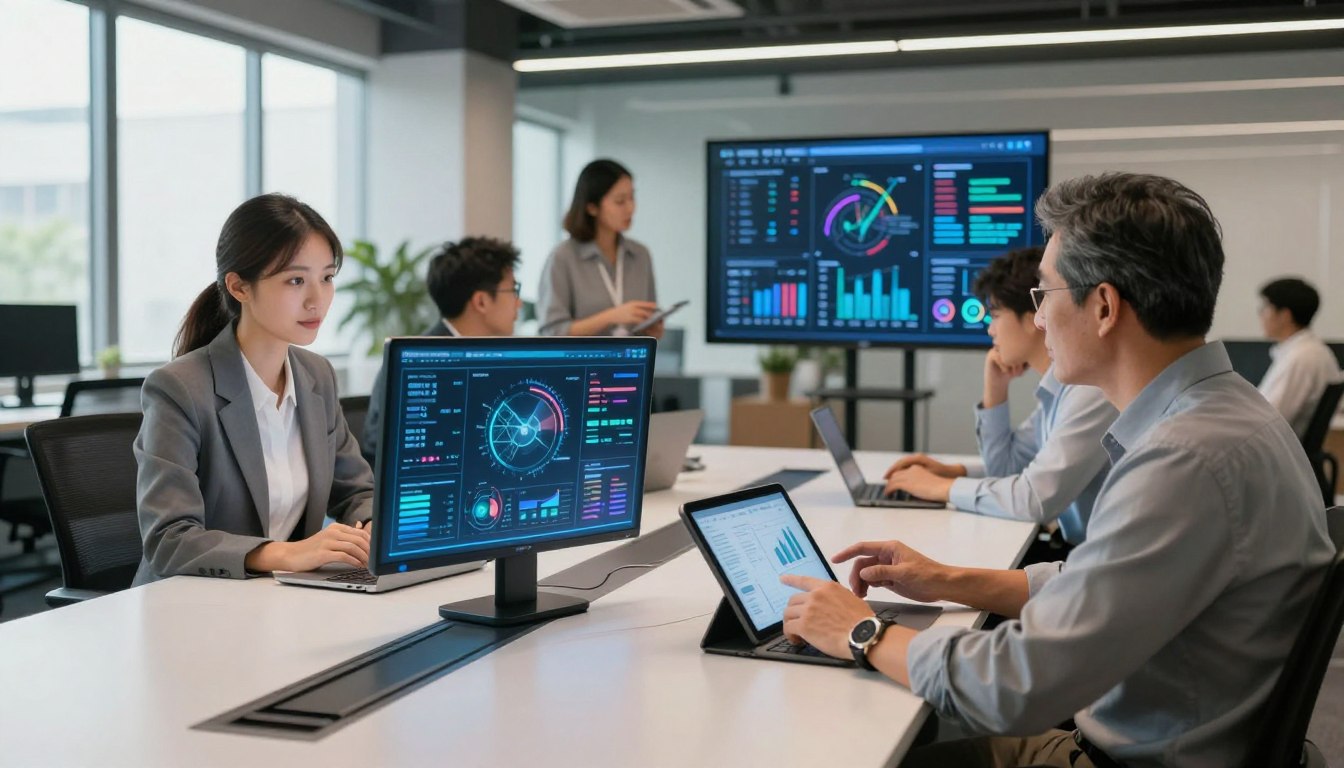
Did you know 77% of top firms say automated systems changed their work big time? This is a huge step for today’s businesses. I look into how using these digital tools can make work better in many fields.
I dive into how companies use ai technology in the workplace to stay ahead. I give a clear guide for leaders to make their workdays better.
Sustainable growth is what every company wants. Knowing the ai benefits for productivity is key to lasting success. I’m excited to show how these new tools help teams do more with less effort.
Key Takeaways
- Automation makes work better for modern firms.
- Using digital tools wisely gives a big edge.
- Guides for leaders help make work easier.
- Growing strong means using smart, data-based systems.
- Understanding the basics helps businesses succeed fast.
Introduction to AI Technology in the Workplace
Knowing about machine intelligence is key for leaders today. AI technology in the workplace is more than a trend. It changes how we solve problems and work efficiently.
Companies can do more than simple tasks with these tools. They can reach for big goals.
Definition of AI Technology
Many confuse basic automation with artificial intelligence at work. Automation does simple tasks over and over. AI learns, adapts, and makes choices based on data.
AI can handle things that old programs can’t. It’s like the difference between a simple calculator and a system that guesses future trends.
This tech is a set of smart algorithms that think like humans. It’s how we get from simple math to predicting the future.
Overview of Workplace Applications
AI is used in every part of a company, from HR to supply chain. It makes work easier and cuts down on manual tasks. Here’s how AI differs from old automation.
| Feature | Traditional Automation | Artificial Intelligence |
|---|---|---|
| Decision Making | Rule-based/Static | Data-driven/Adaptive |
| Learning Ability | None | Continuous Improvement |
| Task Complexity | Low/Repetitive | High/Cognitive |
| Data Handling | Structured only | Structured and Unstructured |
I think digital transformation with ai is a must for companies to stay ahead. As we use more artificial intelligence at work, we focus on helping people, not replacing them. This keeps teams ready for the fast-changing world.
The Role of AI in Streamlining Tasks
Modern businesses are moving fast. They use artificial intelligence at work for tasks that take a lot of time. This lets me focus on creative and strategic work that really matters.
Automating Repetitive Processes
Workplace automation is key to getting rid of boring tasks. I use software for tasks like data entry, scheduling, and sorting emails. This keeps things accurate and cuts down on mistakes.
My team is happier without these tasks. We don’t get stuck on spreadsheets or calendars. We can now solve tough problems that need a human touch.
Task Management and Organization
Robotics in the workplace has changed how we manage tasks. In places that need logistics or inventory control, robots are super efficient. They help my team keep track of physical items.
I also use AI to keep an eye on my projects and resources. These systems help me stay on track and meet deadlines. Streamlining these workflows means I can keep a high standard in all my work.
Enhancing Employee Collaboration
Thanks to smart digital workspaces, teams can work together no matter where they are. The right tools help bridge gaps between places and times. This makes sure everyone feels part of the team’s mission.
AI-Powered Communication Tools
Ai software solutions help teams talk across languages. They translate in real time, so everyone gets the message. This means no important info gets lost.
These tools also make meeting notes easy to read. I don’t have to spend hours on notes. I can quickly see what’s important. This lets my team do more important work.
Virtual Collaboration Platforms
The digital transformation with ai makes virtual platforms better. They can spot problems before they happen. This helps keep projects on track.
These platforms are also where all project info lives. Using them, my team works better together. Everyone knows what’s new with the project.
Data-Driven Decision Making
I turn raw data into smart plans. I use special algorithms to understand big data. This way, every choice is based on strong evidence, not just guesses.
AI in Analyzing Business Trends
Machine learning in business helps me spot new trends fast. I watch how people act and change, even when others miss it. This lets me lead the market by knowing what’s coming.
Machine learning in business makes sense of lots of data. It saves me time by finding trends automatically. This is key to making my work more efficient.
Predictive Analytics for Growth
Predictive analytics give me a peek into the future. I use them to try out different plans. This way, I can avoid problems before they start.
By not wasting time on unsure plans, I can do more important work. These ai benefits for productivity help my team move fast when things change. This makes my company strong and ready for anything.
Improving Customer Service with AI
I’ve seen how smart systems change how companies talk to their customers. They move past old ways to give seamless experiences. This meets the high hopes of today’s digital users.
Chatbots and Virtual Assistants
I think using smart virtual assistants is key for 24/7 support. They use machine learning in business to go beyond simple answers.
They understand the context and how you feel, making interactions feel more like talking to a person. This sophisticated way ensures help is always there, making customers very happy.
Personalized Customer Interactions
I also focus on implementing smart technology at work for custom user paths. AI looks at what you’ve bought and what you’ve looked at. It then suggests things you might like.
This makes customers feel special and understood. When I help companies use implementing smart technology at work, I say it’s not just about automating. It’s about building loyalty through smart, data-driven interactions.
Automating these key moments helps companies grow without losing quality. I’ve seen how this lets teams keep exceptional service even when they get more customers.
AI Technology in Training and Development
Adaptive technology is changing how I train and develop employees. It moves away from one-size-fits-all models. Now, every team member gets the specific help they need to do well.
This change helps my team keep improving and stay motivated.
Personalized Learning Experiences
I use advanced platforms to make training paths for each staff member. These systems look at how each person is doing. They find out where they need to get better.
By using machine learning in business, I can see how they’re doing and suggest the right training. This makes sure they learn what they need to know.

This way, training is both quick and effective. Employees don’t waste time on things they already know. They focus on targeted development that helps them do their job better.
Onboarding New Employees
The first few weeks are key for new hires. Implementing smart technology at work makes this time better. It automates giving out important documents and training videos.
This makes my HR team’s job easier. It also makes new employees feel supported right away.
By automating these tasks, I can focus on the important stuff. Like helping new employees get to know the team. This makes them feel more part of the team and ready to do their job sooner.
Here are some benefits of this approach:
- Consistency: Every new hire gets the same quality information.
- Efficiency: Tasks are done much faster.
- Engagement: Interactive training keeps new staff interested.
Using implementing smart technology at work makes onboarding smooth. It helps my team stay ahead in a changing market. When I use these tools and focus on growth, my team stays skilled and competitive.
The Impact of AI on Remote Work
Working remotely has shown me how important the right tools are. Using ai for digital transformation helps me keep an eye on things without being too much. This way, I build trust and make sure everyone is doing their best.
Remote Team Management Tools
I use ai software solutions to keep my team on track. These tools show me how work is going in real time. It’s not about watching the clock; it’s about seeing how work flows.
These tools help me spot problems early. They save me time so I can help my team more. This way, I’m a supportive manager, not a strict one.
AI-Enhanced Work-Life Balance
Keeping a good work-life balance is key for me. Using ai for digital transformation helps me set boundaries. This stops work from taking over my life.
These ai software solutions also help sort out what’s urgent. They block out distractions so my team can focus. Keeping personal time safe is part of my plan for a happy, productive team.
Addressing Workplace Challenges with AI
Workplace problems often come from human limits. In today’s office, tiredness and mistakes cost a lot. Integrating advanced systems helps teams stay top-notch.
Technology is a great helper. It lets us focus on creative tasks, not boring ones. This is key for businesses to keep up in a quick market.
Reducing Human Error
Workplace automation is key for precise tasks. Humans get tired and make mistakes with repetitive work. Software keeps things perfect.
Also, robotics in the workplace changes how we do things. These tools never get tired. They’re super reliable, unlike humans.
Enhancing Employee Well-Being
I use smart technology at work to watch for burnout. It checks if someone is working too hard. It suggests breaks to keep everyone fresh.
Managing well is important for a happy office. Using data to adjust workloads shows we care about our team. This keeps everyone happy and productive.
| Feature | Manual Process | Automated System |
|---|---|---|
| Accuracy Rate | Variable | Consistent |
| Fatigue Impact | High | None |
| Task Speed | Moderate | High |
| Error Detection | Reactive | Proactive |
By implementing smart technology at work, we’re safe. Workplace automation and AI help us grow. Together, we’re ready for the future.
Ethical Considerations in AI Implementation
I believe technology should help us, not replace us. I make sure human oversight is key. This way, every automated choice fits our values. Ethical use is the base of a good digital culture.

Ensuring Data Privacy
Protecting data is my top goal with workplace automation. I think being open about data use is key. Safeguarding privacy means strict rules to keep data safe and fast.
I push for clear rules on data use and storage. With secure ai software solutions, data stays safe. This trust lets teams use new tools with confidence.
Maintaining Job Security
Some worry AI will take jobs by 2030. I think AI boosts what we can do, not replaces us. It changes tasks, not jobs.
I help my team learn to work with AI. This lets them do more creative work. Workplace automation makes us better, keeping human talent top.
Future Trends in AI Technology at Work
The future of work is changing fast. Artificial intelligence at work will soon be key for all companies. It will go beyond simple tasks to deeper integration.
Emerging AI Innovations
New robotics in the workplace can tackle tough tasks on their own. They can work in changing situations without needing us all the time. This lets companies solve big problems without us always being there.
“The best way to predict the future is to create it.”
These changes will also alter our offices. Here’s how these new things will affect different areas:
| Innovation Type | Primary Benefit | Workplace Impact |
|---|---|---|
| Autonomous Robotics | Increased Precision | High |
| Adaptive Algorithms | Faster Decisions | Very High |
| Smart Infrastructure | Energy Efficiency | Moderate |
The Evolving Role of Employees
As machines do more, we’ll focus on creative thinking and feeling. My ability to understand and lead will be more important. These human skills will be key to success.
By getting ready for these changes, I can lead in a world that’s always changing. Robotics in the workplace won’t replace us. It will help us do our best work.
Conclusion: Embracing AI in the Workplace
I see a clear path forward for organizations ready to transform their daily operations. Integrating smart systems creates a foundation for lasting success in a competitive global market.
Core Advantages for Modern Teams
The shift toward ai technology in the workplace changes how teams interact with complex data. I observe that businesses gain significant speed when they automate routine tasks. These ai benefits for productivity allow staff members to focus on creative problem-solving rather than manual entry.
Taking the Next Step
I urge leaders to audit their current workflows to identify areas ripe for digital transformation. Start by testing small pilot programs with platforms like Microsoft Copilot or Salesforce Einstein to measure immediate impact. Investing in these tools today ensures your company remains agile and ready for future shifts in the industry. Your commitment to innovation will define your long-term growth and employee satisfaction.
اترك رد