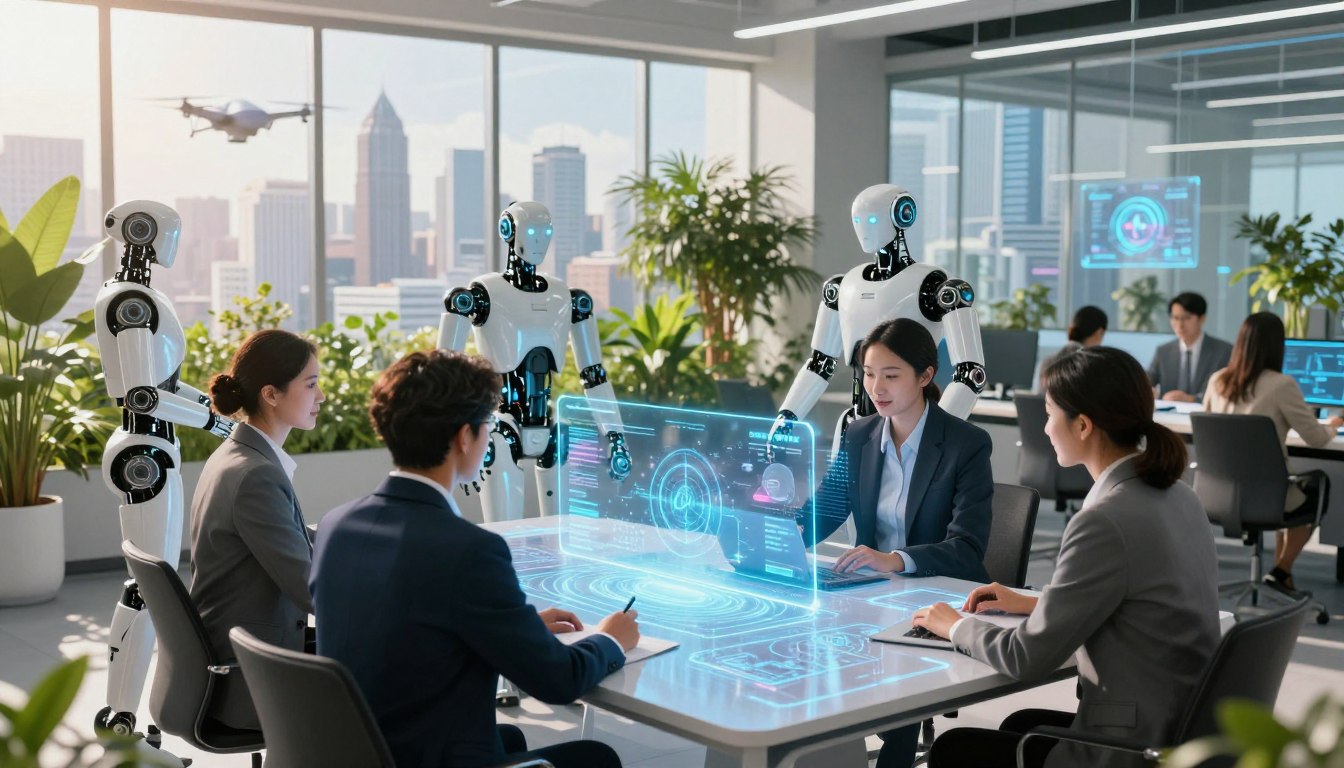
Did you know experts say nearly 97 million new jobs will come by 2025? This big change means the future of employment with ai is about more than just replacing jobs. It’s about changing how we work.
Many people worry if their skills will still be needed by 2030. But, it’s important to see this change as a chance for better work. We’re moving into a time where humans and machines will work together to make things better.
In this article, I’ll show you how to handle the future of employment with ai. We’ll look at the risks and new chances. By knowing these trends now, you can be ready for the future job market.
Key Takeaways
- Automation will likely create more roles than it eliminates by 2030.
- Human-centric skills like empathy and strategy remain irreplaceable.
- Continuous learning is the best defense against job displacement.
- Technological integration will redefine standard workplace productivity.
- Adaptability is the most valuable asset for modern professionals.
The Rise of AI in the Workforce
I’ve seen how smart systems are changing our work. This artificial intelligence workforce is real and making work better around the world.
Overview of AI Technologies
Machine learning and generative models are at the heart of this change. They let computers learn from big data fast and make things that seem like they were made by people.
These tools help us do less boring work. Now, we can think more about big ideas and solving problems. This is a big change from old software that needed us to do everything.
Key Industries Embracing AI
Many fields are using ai in the workforce to stay ahead. In medicine, we have better tools for finding problems. In finance, we can spot risks better.
| Industry | Primary AI Application | Key Benefit |
|---|---|---|
| Healthcare | Diagnostic Imaging | Increased Accuracy |
| Finance | Fraud Detection | Risk Mitigation |
| Manufacturing | Predictive Maintenance | Reduced Downtime |
| Retail | Personalized Marketing | Higher Conversion |
Historical Context of AI in Employment
Looking back, we see a pattern like the Industrial Revolution. The change is fast, but we adapt like we always have.
We’ve moved from doing things by hand to using machines. Now, artificial intelligence workforce is the next step. It’s about getting better and more creative.
How well we use ai in the workforce depends on learning and growing with it. History shows us that those who adapt will do well.
Impact on Job Markets
The debate on impact of ai on jobs is filled with worry and hope. Some worry machines will take jobs, but others see new chances. This mix shows our economy is changing.
Job Displacement vs. Job Creation
Many think all jobs will be lost, but history shows tech changes jobs, not gets rid of them. I think routine tasks will change, but future job market with ai will need complex problem-solving and feeling.
New jobs like AI ethics officers and trainers didn’t exist before. These jobs show humans are still key in tech progress. We’re moving to a world where humans and machines work together for better results.
Sectors Most Affected by AI
Some industries change faster than others because of their work. Manufacturing and data entry are leading this change, as machines do well with repetitive tasks. The table below shows how jobs are changing.
| Industry | Tasks Being Automated | Emerging Human-Centric Role |
|---|---|---|
| Manufacturing | Assembly line sorting | Robotics maintenance technician |
| Data Entry | Information processing | Data quality analyst |
| Customer Service | Basic query resolution | Customer experience strategist |
| Logistics | Inventory tracking | Supply chain AI coordinator |
Geographical Variations in Impact
The impact of ai on jobs varies worldwide. Places with good digital setup and economic support adopt tech faster. But, areas with poor internet or training face a harder time.
Local governments are key in shaping the future job market with ai by investing in education and training. By focusing on local strengths, they can spread the benefits of automation. Success depends on adapting to these changes.
The Role of Automation
Understanding automation is key in today’s artificial intelligence workforce. It’s changing in many fields, like finance and healthcare. Knowing which tasks can be automated helps me plan for my career.
Types of Tasks AI Can Automate
Now, job automation trends focus on tasks that take a lot of time. For example, software can do lots of data entry, scheduling, and financial reports fast. This lets me focus on more important tasks.
AI can also find patterns in documents. It can look at many documents to find issues or predict problems. This makes companies work better.
Limitations of AI in Job Roles
But, AI has its limits. It can’t understand emotions like humans do. This is important in jobs like nursing or counseling.
AI can’t solve new, complex problems. It can only suggest based on past data. This shows that while AI is helpful, it can’t replace human thinking and creativity.
Skills for the Future
To succeed in today’s world, you need special skills. ai-powered employment is changing how we work. People who do well are those who mix human creativity with machine speed.
Importance of Technical Skills
Knowing tech is key, not just for techies. data fluency is now needed in many jobs. Learning to work with algorithms opens up new employment opportunities with artificial intelligence.
You don’t have to code to use AI. Learn to ask AI questions and understand its answers. This keeps you up-to-date as tech changes your field.
Soft Skills That Matter
Machines are great at data, but humans are better at connecting. Your career prospects with ai technology depend on your people skills. Skills like communication and empathy are now more important than ever.
Being able to think critically and understand emotions helps solve problems AI can’t. By focusing on these, you offer value that machines can’t replace. Here’s what’s changing in the workplace:
| Skill Category | Traditional Focus | Future-Ready Focus |
|---|---|---|
| Technical | Manual Data Entry | AI-Assisted Analytics |
| Communication | Standard Reporting | Persuasive Storytelling |
| Problem Solving | Rule-Based Logic | Creative Strategy |
| Adaptability | Fixed Roles | Continuous Learning |
Lifelong Learning and Adaptability
The best skill is learning fast. Having a growth mindset is key for employment opportunities with artificial intelligence. Spend time each week learning new things.
Being able to change when needed is crucial. Seeing AI as a partner, not a foe, makes you very valuable. Remember, your career is a long journey, and learning is the best way to stay ahead.
AI and Remote Work
Looking at job automation trends, I see how AI changes remote work. It makes teams work together from anywhere. This means I can work well, no matter where I am.
How AI Facilitates Remote Collaboration
AI helps us talk better online. Automated meeting transcription services are key. They record talks so I can focus on the chat.
AI also helps with my schedule. It finds the best times for meetings. This lets my team work better, not just plan.
“The future of work is not just about being remote; it is about being connected through intelligent systems that anticipate our needs before we even express them.”
Tools Enhancing Productivity
I use apps to make my work easier. They sort my emails and tasks. This lets me do more creative work.
Here’s how different tools help me:
| Tool Category | Primary Benefit | Impact on Workflow |
|---|---|---|
| Transcription AI | Real-time documentation | High accuracy |
| Scheduling Bots | Conflict resolution | Time savings |
| Project Management AI | Task prioritization | Increased focus |
These changes are big for work. Using job automation trends keeps me ahead in a digital world. I’m sure AI will keep helping me succeed.
The Need for New Regulations
Protecting your career prospects with ai technology means knowing the new laws. The impact of ai on jobs is now a big legal issue. We need rules that help both innovation and worker rights.

Challenges of AI in Employment Law
Today’s labor laws don’t cover AI well. Companies use software to check resumes and watch how workers do. This makes data privacy and algorithmic accountability hard to manage.
Lawmakers need to work on a few things:
- Make hiring algorithms clear.
- Set rules for when AI makes mistakes.
- Keep worker data safe.
- Let workers challenge AI decisions.
Ethical Considerations for AI Use
We also need to think about the moral implications of using AI. The biggest worry is built-in bias. This can keep good candidates out. Being open about how AI works helps keep trust.
The impact of ai on jobs depends on how we use it now. By using AI wisely and ethically, we can protect jobs. I believe the right rules will help us use AI to help workers, not just replace them.
Human-AI Collaboration
I think the biggest wins come from humans and machines working together. We should see tech as a tool to help us, not a threat. This change in ai-powered employment is changing how we solve problems at work.
Synergies Between Humans and AI
Machines are great at handling big data fast. But humans bring intuition and ethics to big decisions. This lets people focus on new ideas and plans.
This mix creates new jobs with employment opportunities with artificial intelligence we never thought of. When humans and machines work together, we can do more than either could alone. This teamwork is key to a modern, effective team.
Case Studies of Successful Collaboration
In healthcare, doctors use software to spot things in scans that humans might miss. It helps doctors spend more time with patients. In art, designers use tools to quickly try out many ideas, freeing them to perfect their work.
These stories show how ai-powered employment makes work better. Companies are solving tough problems faster with these tools. Here’s how humans and AI work together well at work.
| Feature | Human Contribution | AI Contribution |
|---|---|---|
| Data Processing | Contextual Understanding | High-Speed Analysis |
| Decision Making | Ethical Judgment | Pattern Recognition |
| Innovation | Creative Vision | Iterative Testing |
| Communication | Emotional Intelligence | Multilingual Support |
The growth of employment opportunities with artificial intelligence is exciting. I believe as we use these systems more, we’ll see more jobs that value human skills. The future is for those who can work well with smart machines.
Diversity and Inclusion in AI Employment
Creating a fair workplace means we must face hidden biases in our digital hiring systems. The fast growth of ai in the workforce shows tech can help or hurt equality. I aim to make sure these tools help fairness, not block chances.
Addressing Bias in AI Recruitment
Many hiring tools use old data to pick the best candidates. If this data is not diverse, the system might favor certain groups. This makes unconscious bias worse, affecting everyone’s chances.
Using these tools alone can leave out talented people from diverse backgrounds. It’s important to remember that software is only as good as the data it uses. Ignoring these problems can harm our ai-powered employment plans.
Strategies for Inclusive AI Implementation
To make things fairer, companies should check their hiring tools often. They should look for unfair impacts on different groups. Finding these problems early helps fix the system for everyone.
Being open about how AI picks candidates is also key. It’s important for candidates to know how they’re judged. Also, having a human review helps add the detail machines miss. By focusing on these values, we can make ai-powered employment better for all in the ai in the workforce.
The Future of Leadership
I think the biggest change in work today is how leaders work with machines. As tech gets better, the impact of ai on jobs is changing how we manage. Now, leaders need to be good at understanding people and making big plans.

Redefining Leadership Roles in AI Era
Old-school management was all about people and paperwork. Now, leaders are working with teams that include machines. This new way needs leaders to know how to mix tech smarts with creative thinking.
To do well in the future job market with ai, leaders must bring people and tech together. The best managers turn complex data into plans that people can follow. They connect the dots between what machines do and what the team needs to achieve.
Training Leaders for AI Adaptation
Companies need to teach their leaders how to adapt to new tech. Just knowing the software isn’t enough. Leaders need to see the big picture and guide their teams through changes. I say we should focus on continuous learning that covers both tech skills and leadership.
When leaders are well-trained, they can handle the ups and downs of tech changes. By being empathetic and forward-thinking, they make sure ai helps us grow. Getting ready for the future job market with ai means teaching people to work with machines confidently.
The Gig Economy and AI
Freelancers today see big changes thanks to job automation trends. They can now work more efficiently and grow their careers. Thanks to smart tech, they don’t have to do boring tasks anymore.
This change brings new employment opportunities with artificial intelligence. These chances were once hard to imagine for solo workers.
AI Platforms Supporting Gig Workers
Now, platforms help connect freelancers with great projects. They use smart algorithms to find the right work for each person. This saves time and lets freelancers focus on their best work.
These platforms also help with business tasks. They handle things like invoices and taxes. This makes running a freelance business easier and more precise.
Trends in Freelancing with AI
AI is changing how freelancers work. It helps with making content and analyzing data. This means freelancers can do more work in less time.
They can now take on bigger projects. This opens up more employment opportunities with artificial intelligence.
The table below shows how AI changes freelancing:
| Feature | Traditional Freelancing | AI-Enhanced Freelancing |
|---|---|---|
| Client Acquisition | Manual Networking | Algorithmic Matching |
| Administrative Tasks | Manual Invoicing | Automated Billing |
| Project Output | Human-Only Effort | Human-AI Collaboration |
| Market Reach | Local/Regional | Global/Instant |
Adaptability is key for freelancers today. By using these tools, they can succeed in a competitive market. This market values both creativity and technical skills.
Preparing for the Future of Work
We need to be ready for the changes in work. Knowing about the future of work with AI is key. It helps you plan your career.
Organizations Adapting to AI Innovations
Big companies like Microsoft and IBM are changing how they work. They focus on working well with machines. They also help their teams learn new skills.
This shows us what skills are important for our jobs. We can learn from these changes.
Resources for Career Transitioning
There are places like Coursera and LinkedIn Learning for learning. They offer courses in AI and data science. These courses help you keep up with the job market.
Stay curious and ready to learn. Learning now will help you in the future. Start your learning journey today.
اترك رد