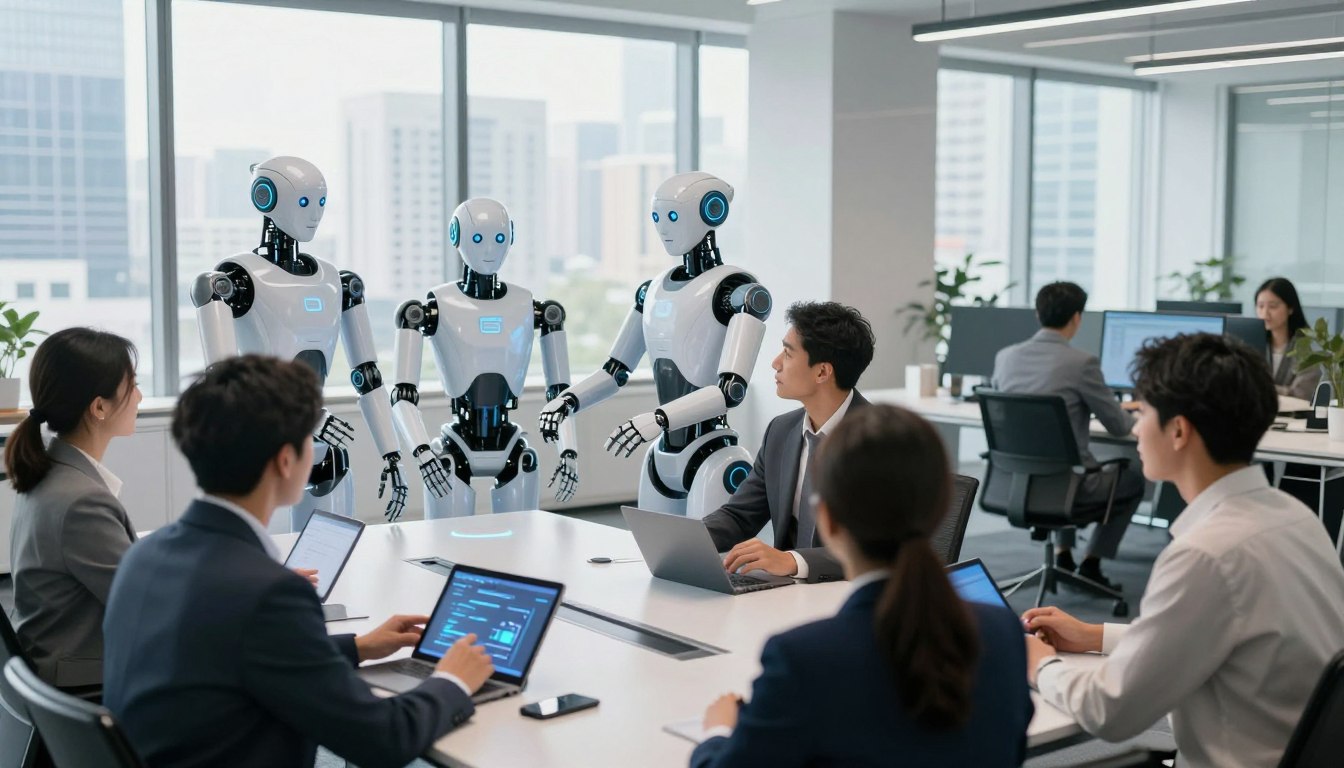
Reports say nearly 85 million jobs might change because of automation soon. This makes many people worried. But it also means big changes in what we value at work.
I want to look into what these numbers really mean for your job. We’ll see if your job might change or not.
Many people ask if their jobs will disappear. I aim to guide you through these changes. Knowing how tech and human skills work together can help you stay strong.
It’s time to get ready for these changes. It’s not just a choice; it’s a must for success today. Let’s talk about how to work with new tech instead of being scared of it.
Key Takeaways
- Automation is reshaping the global workforce rather than simply eliminating roles.
- Adapting to new tools is essential for maintaining professional relevance.
- Human-centric skills remain the most difficult assets for machines to replicate.
- Strategic planning helps mitigate risks associated with rapid industry changes.
- Collaboration between people and technology creates new opportunities for growth.
Understanding AI and Its Capabilities
I think looking at modern software shows us what Artificial Intelligence job impact is all about. Many see these systems as mysterious. But they are based on clear, math rules.
What Is AI and How Does It Work?
Artificial intelligence is like a computer that thinks like us. It uses machine learning to get better over time. It doesn’t need to be told how to do every task.
At the heart of AI are neural networks. They look like our brains to find patterns in lots of data. They can spot trends that take us years to see.
“The development of full artificial intelligence could spell the end of the human race.” — Stephen Hawking
This quote warns us of dangers. But today’s AI is mostly good at one thing. It’s not as smart as humans in general. Knowing this helps us see how Artificial Intelligence job impact affects us.
Current Applications of AI in the Workforce
We use AI every day. It’s in our phone apps and office tools. AI is changing how we work.
Here are some ways AI is used:
- Automated Customer Service: Chatbots answer simple questions. This lets people deal with harder issues.
- Predictive Analytics: Companies use data to guess what will happen next. They get it right most of the time.
- Process Automation: Bots do boring tasks. This means less mistakes for us.
AI doesn’t just replace jobs. It helps us do better work. It lets us focus on big ideas and solving problems.
The Job Market Landscape in 2030
The workplace is changing fast. The future of work with AI is now a sure thing. We’re moving into a time of big changes in how we work and what success means.
Key Trends Shaping the Job Market
Automation is changing jobs a lot. Machines are doing simple tasks, so people can think about big ideas. This makes work more exciting and flexible.
“The best way to predict the future is to create it.”
Remote work tools are getting better too. They help teams work together from anywhere. This means talent can come from anywhere, not just nearby. So, the future of work with AI will value skills like digital smarts and feeling emotions.
Industries Most Likely to Be Affected
Some jobs are changing faster than others. The automation in job market is big in jobs that need lots of data or simple tasks. Here’s how some jobs might change by 2030.
| Industry | Current State | 2030 Outlook |
|---|---|---|
| Manufacturing | Manual assembly | Autonomous robotics |
| Finance | Manual data entry | AI-driven analytics |
| Logistics | Human-led routing | Predictive supply chains |
| Customer Service | Human call centers | Hybrid AI-human support |
These changes don’t mean people won’t have jobs. They mean jobs will change, and people will be more important. I think the industries that adapt best will grow and innovate a lot in the next ten years.
Jobs at Risk of Automation
I think knowing about automation is key to keeping your job safe. Technology brings many good things, but it also changes jobs a lot. I want to show you which jobs might change a lot.

Repetitive Jobs in Manufacturing
Manufacturing has always been a big target for new tech. Now, AI-driven robotics can do tasks that humans can’t do for a long time. This is why many jobs in factories are changing.
“The greatest danger in times of turbulence is not the turbulence; it is to act with yesterday’s logic.”
The Impact on Retail Positions
The retail world is changing fast. Stores are using more automation, like self-checkout machines and robots to track stock. This means fewer jobs for people to do simple tasks.
| Role | Automation Risk | Primary Driver |
|---|---|---|
| Cashier | High | Self-service kiosks |
| Stock Clerk | Medium | Automated inventory systems |
| Warehouse Picker | High | Autonomous mobile robots |
Administrative Roles and AI
Jobs like data entry and scheduling are often automated. These tasks are easy for computers to do. So, many office jobs are changing.
By knowing which jobs might change, you can start learning new skills. Being able to adapt is very important. Start planning your career move now to stay ahead.
Jobs That Are Safe from AI Replacement
Many worry about automation, but some jobs are safe. The job security in AI era is best in areas needing empathy, creativity, and human insight. These jobs need personal connections that machines can’t make.
Creative Professions: Art and Design
Creative jobs turn human feelings into art. AI can make pictures, but it can’t feel like we do. Designers and artists who tell stories and understand culture are very important.
Healthcare and Human-Centric Roles
Healthcare is all about caring for people. Doctors, nurses, and therapists give comfort and care that AI can’t. Even with better tools, these jobs are safe because people want a human touch.
Education and Teaching Positions
Teaching is more than just sharing facts. Teachers guide students in growing up and learning. They help students think and dream, making their jobs key in any economy.
| Profession Category | Primary Human Skill | AI Limitation |
|---|---|---|
| Healthcare | Empathy & Physical Care | Lacks emotional intelligence |
| Creative Arts | Originality & Context | Cannot replicate lived experience |
| Education | Mentorship & Guidance | Cannot provide moral support |
| Management | Complex Decision Making | Struggles with ethical nuance |
By focusing on human skills, you can find stable jobs. Roles that need authentic connection are safe from AI. By valuing what makes us human, you can stay secure in your job.
The Role of AI in Job Transformation
The workplace is changing. Now, we see technology as a force multiplier for human work. This change is already making our jobs better.
AI as a Tool to Augment Human Abilities
Technology is not our enemy. It’s a great helper for boring tasks. It lets us do more important things.
Working with AI makes us better. It helps us solve problems in new ways. Efficiency gains mean we can do more.
New Job Categories Emerging from AI
New jobs are coming because of AI. We need AI ethics officers and prompt engineers. They make sure tech is good for us.
These jobs connect tech and real use. The competition with AI is making jobs better. By 2030, we’ll see many new jobs.
Skills Required for the Future Workforce
Looking ahead to 2030, we need a new way to grow in our careers. The key is to mix human skills with machine power. This way, you can keep your job strong even when technology changes fast.

Importance of Soft Skills
Machines are great at handling data, but they can’t match human touch. Emotional intelligence is now very important in all jobs. It helps us understand others, lead teams, and solve problems in a way machines can’t.
Also, critical thinking and solving big problems are top skills for employers. Humans must check if AI solutions are right and workable. These skills help turn data into useful business results.
Technical Skills to Thrive in an AI World
You also need some basic tech skills. You don’t have to be a programmer, but knowing how to use AI tools is key. Data literacy—being able to work with data—is now a must for many jobs.
Knowing a bit of programming or scripting can also help a lot. It lets you make your work easier and focus on bigger ideas. Here’s a table showing the skills you need to deal with AI in your job.
| Skill Category | Primary Focus | Why It Matters |
|---|---|---|
| Emotional Intelligence | Empathy & Leadership | Builds trust and team cohesion |
| Data Literacy | Analysis & Interpretation | Informs better decision-making |
| Critical Thinking | Judgment & Ethics | Ensures responsible AI usage |
| Basic Programming | Automation & Efficiency | Reduces manual workload |
The Debate: Pros and Cons of AI in the Workforce
The impact of smart systems is both good and bad. Technology is changing fast. We must think about the good and the bad.
Advantages of AI Implementation
AI makes things work better. It helps people do more creative work. This can make the economy grow.
AI also helps us make better choices. It does hard math so we can think creatively. This makes things better for everyone.
Potential Disadvantages and Ethical Considerations
But, AI might take some jobs. People worry they will lose their jobs. This is because AI can do things that people used to do.
“The goal of the future is not to replace the human worker, but to augment our capabilities and allow us to reach new heights of productivity through collaboration.”
We also have to think about fairness. AI can be unfair if it’s not programmed right. We need to make sure AI is fair and safe.
The table below shows how humans and AI are different:
| Feature | Human Contribution | AI Contribution |
|---|---|---|
| Decision Making | Empathy and Ethics | Speed and Data Analysis |
| Creativity | Originality and Vision | Pattern Recognition |
| Adaptability | Contextual Understanding | Scalable Execution |
AI and humans can work together. We can make sure AI helps everyone. I think we can make a better future for all.
Preparing for Changes in Employment
Getting ready for the future of work with AI is a must for keeping your job. The best workers see learning as a never-ending journey. They keep learning as new tech comes out.
Continuous Learning and Upskilling
It’s smart to spend time each week learning new things. Sites like Coursera, edX, and LinkedIn Learning have special courses. These courses help you get skills that are in demand.
Look for training inside your company too. Many places offer tools and workshops on AI. Learning these tools early makes you very important.
Importance of Adaptability in Careers
The future of work with AI needs you to always be ready to change. Being able to switch when things change is more important than knowing one thing well. Keep up with new tech by reading news, listening to podcasts, and joining groups.
Having a growth mindset means seeing change as a chance, not a problem. Being open to new things helps you move into new jobs that come from AI. Here’s how old career paths are different from new ones with AI.
| Feature | Traditional Career Path | Future-Proof Career Path |
|---|---|---|
| Skill Acquisition | One-time degree | Lifelong learning |
| Professional Focus | Static job description | Dynamic, evolving roles |
| Technological Stance | Avoidance of automation | Active AI collaboration |
| Career Strategy | Linear progression | Agile pivoting |
Controlling your own career growth is key for the future of work with AI. Mix learning new skills with being open to change. This way, your career will stay strong even when things get shaky.
Real-World Examples of AI Integration
I’ve seen many companies use new tools to make work better. They use AI job automation trends to help their workers. This lets people do more creative work.
Companies Leading the Way with AI
Big names like Microsoft and Salesforce are leading in using AI. They use it to do tasks like data entry and scheduling. This lets people work on more important things.
Siemens is another great example. They use smart tools to predict when machines might break. This makes work safer and happier for everyone.
Case Studies of Successful AI Adoption
Success comes from listening to workers and training them well. Companies that do this keep their best people. They see AI as a helper, not a replacement.
The table below shows how different areas are using AI well.
| Industry | Primary AI Tool | Human Benefit |
|---|---|---|
| Software Development | Code Completion AI | Reduced Debugging Time |
| Customer Service | Sentiment Analysis | Improved Resolution Quality |
| Manufacturing | Predictive Analytics | Enhanced Workplace Safety |
| Marketing | Content Optimization | Increased Creative Output |
These stories show AI can be good for jobs. When used right, it makes work better and more fun. I think this is the future of work.
Government and Policy Considerations
Looking ahead to 2030, public policy’s role in handling automation’s rise is huge. The implications of AI on employment affect many areas, from making things to creative work. Without clear rules, many workers might get left behind.
Regulations Surrounding AI in Employment
Today, laws struggle to keep up with new tech. Old labor laws don’t cover new issues like AI. We need transparent AI policies to protect workers from unfair treatment.
Lawmakers are starting to make rules for AI. They want to make sure AI helps, not replaces, people. This is key to keeping trust in our digital world.
“The goal of future policy should not be to stifle innovation, but to ensure that the benefits of artificial intelligence are shared broadly across all levels of society.”
Role of Government in Ensuring Job Security
To keep jobs safe in the AI age, governments need to do more than just help the unemployed. Investing in big retraining programs is a smart move. It helps workers learn new skills, like empathy and solving big problems.
There’s also talk about social safety nets like universal basic income. Updating laws for the gig economy and remote work is also important. Here’s a table showing key policies for a smooth transition.
| Policy Initiative | Primary Goal | Expected Impact |
|---|---|---|
| Retraining Subsidies | Skill Upgrading | Higher workforce mobility |
| Universal Basic Income | Economic Stability | Reduced poverty risk |
| Labor Law Reform | Worker Protection | Fairer employment terms |
| AI Oversight Boards | Ethical Compliance | Increased corporate accountability |
The job security in the AI era needs teamwork between public and private sectors. By focusing on education and fair rules, we can lessen AI’s bad effects on jobs. I’m hopeful we can make a future where tech helps all workers.
Conclusion: Embracing the Future with AI
Technology changes fast, making us wonder about jobs. I think we need to see machine intelligence in a new light. Will AI Replace Human Jobs in 2030? It depends on how we adapt to these new tools.
Staying Positive about Change
See these new techs as chances to grow. Companies like Microsoft and Google make work easier. This lets you focus on big ideas.
Being positive helps you control your career. Will AI Replace Human Jobs in 2030? These tools might change what you do, not replace you.
The Importance of Collaboration Between Humans and AI
Working with AI is key for the future. I imagine a world where humans and machines work together. By learning new skills, you can lead in this new world.
Will AI Replace Human Jobs in 2030? By working together, your job will stay important and fulfilling. Let’s move forward with hope and create a better work future together.
اترك رد